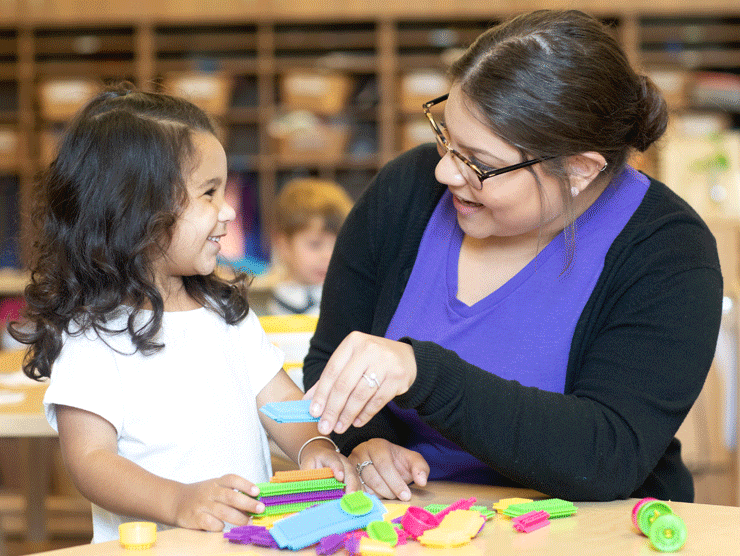
Starting daycare is easier to navigate when you prepare for your child’s first day of daycare, build relationships with your child’s teachers, establish consistent drop-off and pick-up routines, and know how you’ll stay informed throughout the day.
For parents, preparing for daycare also means making space for the emotions that come with sharing your child’s care.
Whether you’re feeling excited, uncertain, or both, these practical tips can help you feel more informed, connected, and supported as your family begins care.
First day of daycare checklist for parents
- Confirm the arrival time, entrance, parking, and sign-in process.
- Label bottles, clothing, comfort items, and other supplies according to center guidance.
- Pack required forms, medications, or care plans using the center’s approved process.
- Review the classroom schedule and your child’s expected meals, naps, and activities.
- Agree on the goodbye routine and teacher handoff.
- Confirm how, when, and through which channel you will receive updates.
- Allow extra time so the morning does not feel rushed.
How can parents manage their emotions when starting daycare for the first time?
Feeling emotional at drop-off does mean you made the wrong child care decision. You can value the support care providers and still find separation difficult. Acknowledge those feelings, then consider what would help you feel more informed and supported.
When uncertainty arises during the daycare transition, turn it into specific questions that help you understand how the center will care for and communicate about your child:
- Who will comfort my child when they need reassurance?
- How will teachers learn my child’s routines and preferences?
- What will happen if my child has trouble settling in?
- How will I hear about my child’s day?
- When and how can I check in after drop-off?
- Who should I contact if I have a concern?
Bring these questions to your child’s teacher or center director. Revisit what helped you choose the program in the first place, while giving any unresolved concerns the attention they deserve.
Leave some breathing room after drop-off, call someone you trust, or take a short walk before your next commitment.
How can you feel more confident about your daycare decision?
Your decision should reflect your family’s needs and what matters most when choosing a program. Whether you’re working, pursuing education, managing family responsibilities, or seeking dependable support, keep those needs at the center of your choice.
When comparisons or second thoughts arise, return to what helped your family make that decision:
- What needs do this care arrangement help us meet?
- What helped me feel comfortable with this program?
- What opportunities do I want my child to have while in care?
- How does the program’s approach align with what matters to us?
- What questions do I still want to discuss with the teachers or director?
Stay involved, ask questions, and use what you learn about your child’s experience to guide ongoing conversations.
How can you build a partnership with your child's teachers?
Watch: Bright Horizons Chief Academic Officer, Rachel Robertson, discuss the importance of strong parent-teacher relationships at our centers.
Establish communication methods with your child’s teachers and share updates from home with them. Start with basic details such as familiar routines, favorite activities, ways your child expresses their needs, and what you do to offer comfort.
For example, instead of saying, “My toddler has trouble with transitions,” explain what you’ve noticed: “Giving a short warning before we leave an activity helps at home.”
As you prepare your child to start daycare, discuss with the center team on:
- What you’d like teachers to know about your child.
- How you can receive updates and share information.
- Who to contact with questions or concerns.
- When to schedule parent-teacher conferences.
Raise questions as they come up and arrange a separate discussion when a busy arrival or departure is not the right setting.
What drop-off routine can help children and parents starting daycare for the first time?
Create a drop-off routine that feels familiar to both you and your child. Discuss it with your child’s teacher before the first day of daycare so you know how you’ll handle drop-off, especially when saying goodbye feels emotional.
Choose a simple ritual you can repeat, such as:
- A special goodbye handshake or two high-fives.
- A hug, a kiss, and the same short phrase each morning.
- A quick goodbye song followed by a wave.
- Helping your child put away their belongings, then saying goodbye.
- Reading one short book together before handing drop-off to the teacher.
Remember to always say goodbye rather than slipping out while your child is distracted. Tell your child you’re leaving and when you’ll return using a familiar part of their day: “I love you. I’ll be back after afternoon snack.” Then, let the teacher know you’re ready to leave so they can support your child through the transition.
Before you go, discuss with your child’s teacher about when and how you can check in. Having a clear handoff and a plan for an update gives you a next step instead of leaving you wondering how your child settled after you left.
How can parents stay connected throughout the day?
Before care begins, ask how your center communicates whether that’s through phone calls, email, a parent app, or quick teacher conversations. Confirm who you should contact, when to expect a response, and how to set up a longer discussion if needed.
At Bright Horizons, the My Bright Day app provides daily activity updates, photos, and videos of your child.
How can you prepare for pick-up and the transition home?
Give yourself and your child space to reconnect before moving into the next part of the day. Keep pick-up simple, and try a few familiar steps:
- Greet your child warmly and offer a hug.
- Allow a moment to finish an activity before packing up belongings.
- Ask the teacher for a brief update rather than expecting your child to explain the whole day to you.
- Plan a quiet ride home or a few minutes to read a short story before starting dinner.
If you notice a recurring difficulty at pick-up, describe it to the teacher and discuss what you could try together.
How long does it take a child to adjust to daycare?
There is no single adjustment timeline. Age, temperament, prior separation experiences, health, sleep, classroom routines, and the consistency of care can all shape the transition. Some children settle quickly, while others need more time and reassurance. Focus on patterns rather than one difficult morning and ask the teacher what they observe after you leave.
If distress is intense, continues without improvement, or affects eating, sleeping, or daily functioning, discuss what you are seeing with your child’s teacher and pediatrician. They can help you consider your child’s individual needs and next steps.
Starting daycare is a transition for your whole family, and you don’t need to have everything figured out on day one. Focus on building relationships with teachers, creating familiar routines, and asking for support when you need it. You bring essential knowledge of your child to this partnership. Keep sharing it as you find your way together.
Ready to take the next step? Schedule a Bright Horizons center visit to ask questions and explore whether the program is right for your family.