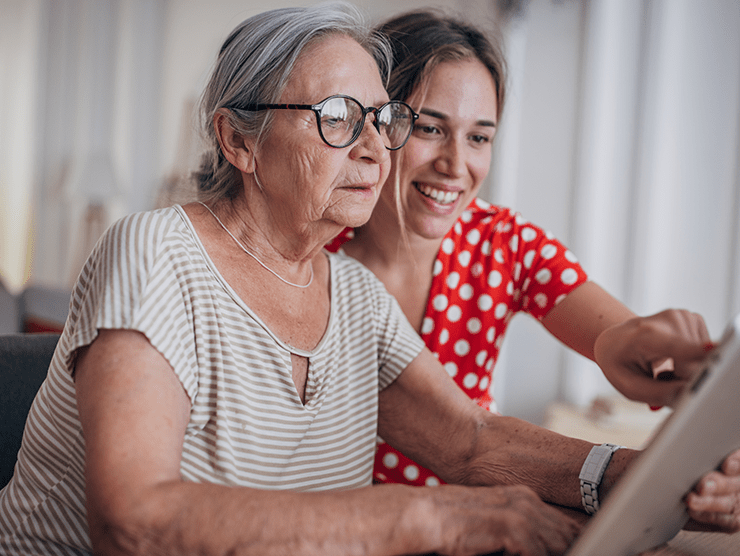
Growing up, Jane remembers her mom perpetually telling her to “Turn off the TV and go outside!”
These days, she and mom are having the same conversation – only in reverse.
“I’m like, mom…don’t you want to go somewhere?” says Jane about her 80-year-old mom’s screen habits. “I mean, I’m so glad she’s so comfortable with the computer. But I don’t think my kids are online as much as she is!”
Jane’s probably not wrong. Turns out, Boomers are the real digital age, with older adults winning the screen-time derby, clocking in at four-hours-plus per day. “The group increasingly populated by aging Baby Boomers,” writes Pew, “now spend more than half of their daily leisure time in front of screens.”
The senior screen time isn’t totally new. Anyone who grew up in the 70s probably has a tale of grandma stopping everything midday to take a seat in front of the Zenith to watch “her stories” (the mid-twentieth-century term for soap operas, for those not in the know). But with only three TV networks, and a viewing window that ended at midnight with the playing of the Star Spangled Banner, it wasn’t a round-the-clock kind of thing. Today, whole days can be lost with nothing to show for it but a level up on Candy Crush – especially if the retirement life means there’s no schedule to follow.
And there are downsides. The Pew study says it’s eating into senior socializing time – a real concern at a time when loneliness is cross-generational epidemic. Then there are the physical effects – the headaches, dry eyes, insomnia, and general aches and pains we all know – all of which can be worse for seniors. Compounding the side effects is the fact that hours spent sitting front of a screen are hours spent not moving. And for seniors, not using mobility can become akin to losing it.
That’s not to say screen time is all bad. Computer literacy creates its own brand of connection – most notably opening doors to tech-savvy grandchildren who might otherwise be less accessible. It also creates common ground if, say, everyone’s watching the same TV shows.
So while no one’s saying parents should forego screens completely, there are a few ways to ensure it’s not a crutch.
Make it on-demand: Daytime TV doesn’t have to be watched during the day – but not every senior is adapt at the DVR. Since Pew says most senior screen time is spent in front of the TV, a tutorial on auto-record and streaming can be game changing, freeing up daytime activity by re-positioning must-see TV for less disruptive hours.
Turn on notifications: Lots of devices will tell you how much time you’re spending on screen. The totals can be eye-opening (and a little horrifying). Let’s just say there’s nothing like the notification, “Screen time was up to 19 hours this week” to incite one to find something else to do.
Introduce diversions: In the absence of activities, screens are a fallback for all of us. But getting out requires someplace go. If you haven’t already investigated your local senior center (many offer activities, social time, and transportation), now’s a good time to add it to your loved one’s IRL play list.
Make screen time count: Learning online is one thing. Mindlessly watching reality shows or “liking” every photo of every child of every third cousin twice removed is something else. If one must be on a screen, make it count, as with learning a language. Gamified language apps are easy to learn, and playing them has fringe benefits, since language learning is a known guard against memory loss.
Make it social time: Yes, Zooming a card game is technically still screen time. But it’s also socializing. And those of who grew up in the pre-digital age still reference the card games grandma and grandpa taught us as kids. So it may be time online – but also time well spent.
Finally, if endless screen marathons are a new phenomenon, you’ll want to know why. Sometimes the sedentary life is less a cause than a symptom – maybe of under-the-radar mobility issues that mom and dad are loathe to talk about, but that are keeping them in place. That may require a few targeted questions, and maybe a trip to the doctor. After a few talks about lifestyle, Jane introduced her mom to an at-home trainer who’s gotten her moving more. “She still enjoys her screens,” says Jane. “But now at least it’s balanced with other things.”