Just when you were feeling comfortable with your child’s teachers in the infant care program, you find out it is time to think about transition to toddler care. In child care settings, this is known as “moving up” and refers to a child transitioning from one classroom or age-based program to the next. Whenever this transition happens, it may feel as stressful to parents, as it might to children.
Understanding what this transition involves—emotionally, logistically, and developmentally—can help families feel more prepared. A few reassurances to keep in mind:
- There’s no single “right” timeline. Care teams expect children to adjust at different speeds, and brief moments of hesitation or regression are a normal part of supported classroom transitions.
- Attachment doesn’t disappear. Strong, responsive relationships with infant caregivers help children feel secure and lay the foundation for trusting new teachers.
- Consistency supports confidence. Familiar routines, daily rhythms, and caregiver approaches are intentionally carried over to help children feel safe as they adjust to a new classroom.
- Different doesn’t mean worse. Toddler classrooms are structured to balance independence with attentive caregiver support.
- Parents need time, too. Transition plans are designed to support families as well as children, and it’s okay if your own adjustment takes a little longer.
Preparing for a toddler classroom transition
Emotional readiness during a daycare transition
For many families, the transition to toddler care brings mixed emotions. Young children are forming strong attachments to familiar caregivers, and saying goodbye can feel hard. It can help to acknowledge these feelings as a normal part of the process. Giving yourself permission to feel uncertain allows you to approach the transition with empathy—for both your child and yourself.
Routine changes when moving to toddler care
Transitions into toddler care often come with noticeable changes to everyday routines. Schedules may look different, group sizes may be larger, and children may be encouraged to take on more independence throughout the day. These shifts can take time to settle into. Keeping routines predictable where you can—such as morning drop-off rituals or bedtime routines—can provide a sense of continuity and security during this period of change.
Tips for supporting transition to toddler care
Model a positive outlook
Young children look to their trusted caregivers for guidance on how to feel during change. Build your child’s enthusiasm for their new classroom and peers.
Meet toddler classroom teachers
Ask to meet your child’s new teachers to help build healthy parent-teacher relationships and to see the classroom ahead of time. When you meet with the new teachers, tell them about a favorite toy or book your child enjoys. Share the type of classroom communication that is valuable to you (number of diaper changes, activities they participated in, food they ate, etc.).
Ask how classroom transitions are supported
Learn how the teachers helped other children transition and what they would recommend, knowing your child’s temperament. Whenever possible, it is better if your toddler can gradually ease into their new room, meet new teachers, or engage in one or two activities in the new classroom before the transition. That said, it is important to follow your child's lead.
Allow time to adjust to toddler care
It is important to allow time for everyone to get comfortable with the toddler classroom and to bond with the new teachers. As everyone has their own unique personality, you
will probably find that the toddler teacher may do things a little differently than your child’s infant caregiver. Give time for the new relationship to develop among you, your child, and the new caregiver as you all adjust to a different style.
Maintain familiar connections
If you’re transitioning classrooms at the same child care center, find ways for your child to engage with familiar faces. In the first few days of transition to the toddler classroom, stop by and wave “hello” or “goodbye” to their infant room teachers. Familiar faces and places will help your child feel confident in their environment.
Keep routines predictable
Keeping routines predictable where you can—such as morning drop-off rituals or bedtime routines—can provide a sense of continuity and security during this period of change
Moving from an infant care setting to a toddler care setting
Beyond emotional and routine changes, moving to toddler care often means entering a new physical and social environment. Helping your child become familiar with the new classroom—through visits, gradual transitions, or conversations about what to expect—can make the environment feel less intimidating. If your child is transitioning within the same center, continuing to acknowledge familiar spaces and caregivers can provide reassurance as they build confidence in their new setting.
What to expect in the toddler classroom
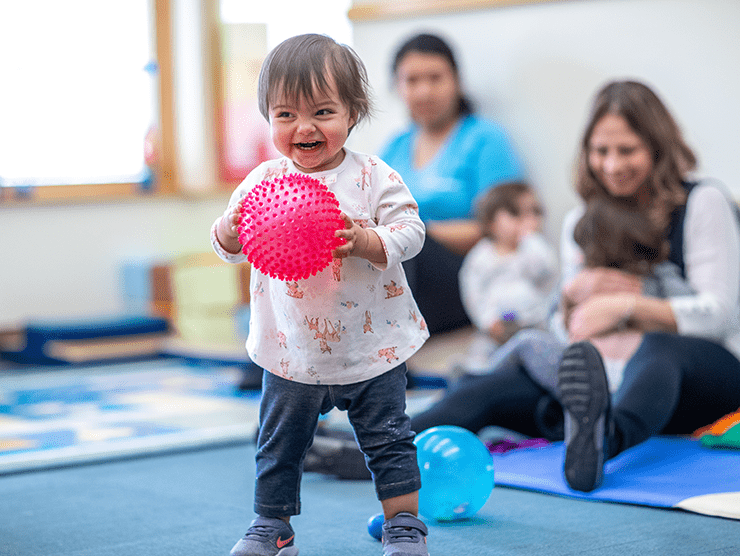
We often think of infant rooms with soft music and lighting, sleeping babies, and babies on their tummies on mats reaching for toys. Toddler classrooms, in contrast, have a reputation for being bustling and busy with children trying out their newly acquired skills of walking, climbing, and saying "no." Knowing what to expect in the toddler classroom can help ease the transition.
Caregiver support and structure in toddler care
In many toddler care programs, the individualized care you came to expect in the infant room will continue, though ratios and group sizes may be larger. As children become more independent, teachers often support skills such as self-feeding, simple choices, and early peer interactions.
Developmental changes in toddler classrooms
Some physical changes may accompany your child's transition to the toddler room, such as moving from a crib to a cot or mat at rest time. Depending on your child's center, the transition may also mean less reliance on bottles, more use of cups, and less use of pacifiers.
Supporting social and emotional skills
A possible challenge in toddler rooms is that non-verbal toddlers sometimes use physical means (such as biting or pushing) as strategies to communicate wants and frustrations. Talking with teachers about how these behaviors are addressed—and how families and educators can work together to support positive communication—can help build a shared approach.
Marking the milestone
As with many transitions, the more communication you can have with your child’s new teachers prior to the transition to toddler care, the better. Some families choose to acknowledge this milestone by taking photos of the first day in the new classroom or creating a new morning routine, small rituals that help signal growth and continuity as your child moves forward.
Take the next step in your child care transition
Moving up to a toddler classroom is an important milestone for your entire family. With the right support, consistent routines, and strong caregiver partnerships, this daycare transition can be a positive step forward that supports confidence, independence, and continued growth.
If you’re preparing for an upcoming classroom change or want personalized guidance, connecting with your child’s care team can make all the difference. They can help you understand timing, transition plans, and what to expect in the toddler classroom. Take the first step and find a center today.
What does moving up in child care mean?
Moving up in child care refers to a child transitioning from one age-based classroom to the next, most often from infant care to a toddler classroom, based on developmental readiness and program structure.
When do children move from infant care to toddler care?
The timing varies by child and child care program. Factors include a child’s development, classroom availability, and state or center regulations.
How do caregivers support children during classroom transitions?
Caregivers support transitions by maintaining consistent routines, building on existing relationships, offering gradual classroom exposure, and partnering closely with families.
Is it normal for toddlers to struggle with daycare transitions?
Yes. Periods of hesitation or behavioral changes are common and expected. With caregiver support and consistency, most children adjust over time