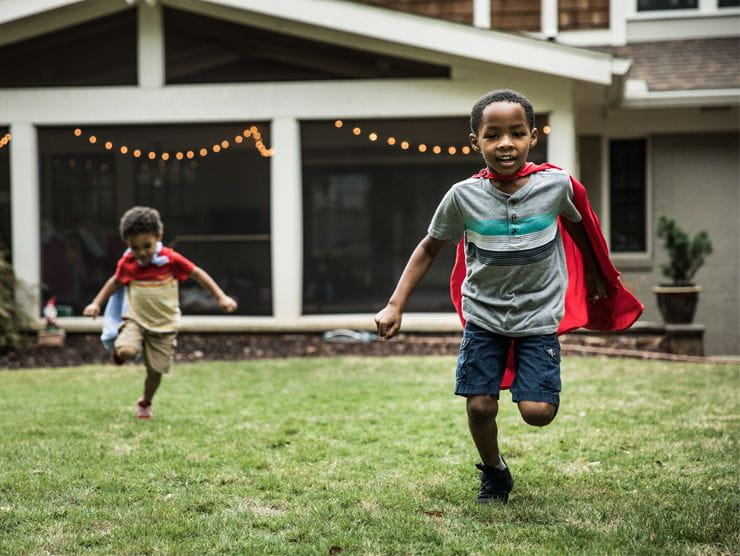
What is childhood development?
Childhood development is the progression of physical, cognitive, language, and social-emotional skills that children build as they grow. These interconnected domains shape how children learn about, communicate with, and relate to the world around them
The four key domains of development
- Physical: Includes gross and fine motor skills like crawling, walking, and grasping objects.
- Cognitive: Involves executive function skills, problem-solving, and creative and flexible thinking.
- Language and Communication: Covers speech, listening, and expressive abilities.
- Social and emotional: Encompasses forming relationships, building empathy, and learning to regulate emotions.
The stages of child development
While every child’s development is unique, research from the Zero to Three website outlines common milestones that most children reach within specific age ranges. These benchmarks can assist parents and caregivers, making it easier to recognize and support children’s growth across physical, cognitive, language, and social-emotional domains.
Infancy (0-12 months)
- Physical: Lifts and controls their head, rolls over, sits without support, pulls up to stand, and may take their first steps.
- Language: Coos, babbles, responds to familiar voices, and begins using gestures like waving or pointing.
- Social-Emotional: Smiles socially, forms strong attachments to caregivers, and expresses a range of emotions through facial expressions and sounds.
- Cognitive: Explores their surroundings using hands and mouth, shows curiosity, and recognizes familiar people and objects.
Toddlerhood (1-2 years)
- Physical: Walks independently, begins to run, climbs onto furniture, and starts to kick or throw a ball.
- Language: Uses simple words and short phrases, follows basic directions, and names familiar people or objects.
- Social-Emotional: Shows affection for caregivers, experiences big emotions, begins to play beside (and eventually with) other children, and demonstrates growing independence.
- Cognitive: Engages in pretend play, solves simple problems, and explores cause and effect through play and daily routines.
Preschool (3-5 years)
- Physical: Hops, stands on one foot, throws and catches a ball, and uses utensils with increasing skill.
- Language: Engages in back-and-forth conversation, tells simple stories, asks “why” questions, and understands basic grammar.
- Social-Emotional: Cooperates with peers, manages emotions with support, and begins to understand rules and routines.
- Cognitive: Matches shapes and colors, counts objects, and solves simple puzzles.
For more information, visit the Zero to Three website.
How to support developmental milestones at home
Parents play a vital role in nurturing early childhood development, especially from ages 0 to 6. At home, simple, intentional choices can make a meaningful impact:
- Protect playtime. Play is an opportunity for children to learn about themselves and others and make sense of the world. Allow time, space, and encouragement for creative and imaginative play — independently and with you.
- One of the simplest and most effective things you can do to support your child’s growth is to read to them daily. Reading together builds the strong bonds of affection and trust that we know children need to thrive.
- Follow your child’s natural developmental rhythm, understanding that growth happens in spurts and looks different for each child across domains.
- Rotate toys, materials, and activities to spark curiosity and encourage deeper engagement.
- Most importantly, build strong, responsive relationships through play, conversation, and shared routines.
These everyday moments foster confidence, resilience, and a lifelong love of learning—core values of Bright Horizons’ Discovery Driven Learning® approach.
From milestones to meaningful moments
Childhood development is a beautiful, complex journey. While milestones provide helpful benchmarks, it’s the everyday moments—filled with love, play, and connection—that shape a child’s growth.
Bright Horizons supports children in reaching developmental milestones by providing a nurturing environment and research-based curriculum. Through Discovery Driven Learning®, our trained educators encourage children to actively explore and make sense of the world around them. This approach blends hands-on experiences, thoughtful guidance, and child-led investigation, ensuring that each child’s unique strengths and interests are recognized and supported.
Whether building fine motor skills through creative art projects or fostering language development during story time, Bright Horizons tailors learning experiences to promote growth across all areas. Families are kept informed and engaged, making it easier to support childhood development both at school and at home. Find the right early childhood education program for your child here.
Frequently asked questions on childhood development
1. Can screen time affect developmental milestones?
Excessive screen time can affect attention span and language development in young children. Bright Horizons recommends prioritizing hands-on, real-world experiences that foster active exploration and social interaction. Choose interactive content, set limits and monitor use, power down your own devices during family time, and encourage play whenever possible.
2. How can I encourage independence while still providing support?
Encourage independence by offering choices, setting consistent routines, and celebrating small successes. Create a child-centered environment with accessible materials and opportunities for self-directed learning. At the same time, be available for guidance and encouragement to build your child's confidence and resilience.
3. Is it normal for development to slow or plateau?
Yes, it is normal for children's development to occur in spurts and for progress to plateau at times. Growth rates vary across different domains and children progress at their own pace. Parents and caregivers should look for trends over time and provide support tailored to each child's unique rhythm.
4. How can I help my child build confidence?
Some of the most effective ways to enhance confidence in your child occur through simple, everyday moments. Engaging in play, conversation, and shared routines helps children feel valued and capable. .Embracing mistakes as opportunities for growth helps your child trust in their capabilities while knowing they can handle it if they are not successful.
5. How do routines support development?
Routines offer predictability, reduce stress, and help children learn time management. We believe that consistent routines create a safe environment where children know what to expect, allowing them to focus on learning and exploration.
6. How can caregivers and educators work together?
Collaboration is essential. Share observations, set goals together, and maintain open communication with your child’s educator. Bright Horizons keeps families informed and engaged, making it easier to support developmental milestones both at school and at home.