What is preschool?
Preschool is often a child’s first step into a classroom. While attending preschool is not mandatory, it can play an important role in early childhood development—socially, emotionally, physically, and cognitively.
If you're wondering whether preschool is right for your child, this guide breaks down everything you need to know.
What happens in preschool?
Preschool is an early childhood education program designed for children around the ages of 2.9 to 5 years old. Its goal is to prepare children for kindergarten by fostering foundational skills through play, exploration, and guided activities.
Children in preschool engage in:
- A curriculum with hands-on activities that encourages exploration, experimentation, and asking “why” questions to develop problem-solving and critical thinking skills.
- Small and large group activities and peer interactions that enhance social-emotional development.
- Songs, stories, and hands-on explorations boosting early literacy and STEM concepts.
- Outdoor activities to promote gross motor skill development.
Preschool is all about sparking curiosity and helping children learn how to be thinkers and learners.
Should I send my child to preschool?
Although preschool is not a required part of a child’s educational journey, it offers many benefits like:
- Developing routines and early learning habits.
- Building confidence and social skills.
- Learning to follow instruction and independence.
It also eases the transition into kindergarten through introducing classroom structures in a gentle and age-appropriate way.
What do children learn in preschool?
Through thoughtfully designed activities and interactions, children build a wide range of skills that support school and future readiness skills. Here are some developmental areas that preschool supports:
Social-emotional development:
Preschool helps children learn how to navigate relationships and emotions in a group setting.
Children are learning to:
- Share and take turns.
- Express feelings appropriately.
- Develop empathy and cooperation.
- Resolve conflicts with guidance.
These experiences lay the groundwork for emotional resilience and positive peer interactions.
Language development:
Children learn to:
- Expand their vocabulary through songs, stories, and conversations.
- Develop listening and comprehension skills.
- Express their ideas and needs with words.
- Follow simple directions.
Strong communication skills are essential for success in school and life.
Fine and gross motor development:
Preschool activities are designed to strengthen both the small and large muscle groups:
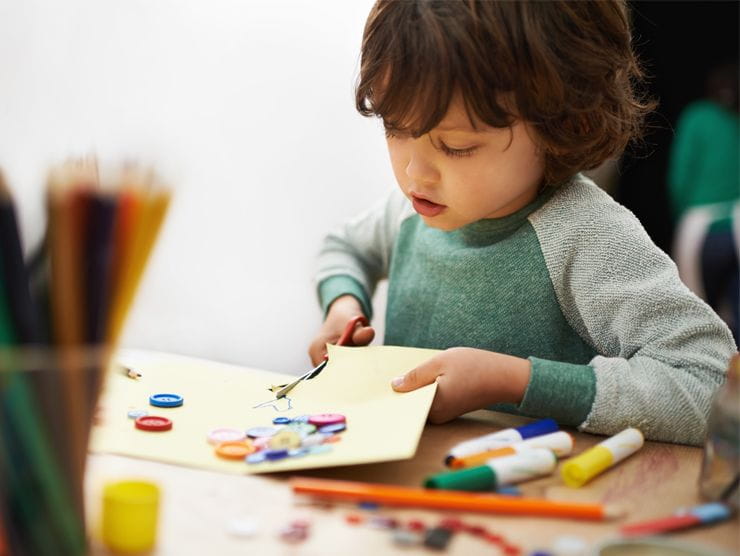
- Fine motor skills: Cutting with scissors, drawing, moving small objects, and writing.
- Gross motor skills: Running, jumping, climbing, and dancing.
These physical skills support independence and coordination, which are important for everyday tasks and classroom participation.
Independence and self-help skills:
Preschool encourages children to take responsibility for themselves in age-appropriate ways like:
- Washing hands and using the bathroom.
- Packing up belongings.
- Cleaning up after activities and play.
- Making simple choices like choosing what book to read or which small group activities to participate in, helping children feel capable and secure .
Academic skills:
While preschool isn’t focused on formal learning, it introduces foundational academic concepts through play and exploration.
Children are:
- Recognizing letters, numbers, shapes, colors, and pattern.
- Sorting and matching.
- Asking questions and solving problems.
- Developing attention span and memory.
Cognitive development:
In preschool, children are developing early cognitive skills that prepare them for future learning success. Through play and exploration, children are:
- Practicing critical thinking by asking questions and making predictions.
- Solving problems through puzzles, building, and hands-on activities.
- Learning self-regulation as they follow routines and manage emotions.
- Developing executive function skills like planning, memory, and flexible thinking.
How do I choose a high-quality preschool program?
Choosing the right preschool program is a big decision, and understanding what makes a program high-quality can help you feel confident in your choice. Watch: Rachel Robertson, Bright Horizons, Chief Academic Officer, explain what you should be looking for when choosing a high-quality education program.
Visiting the school, observing the classroom, and talking to teachers can also be helpful to get a better understanding of the program’s culture and values. To learn more about what to look for when visiting an early education program, use this center visit checklist.
Is my child ready for preschool?
Every child develops at their own pace, but signs of preschool readiness may include:
- Showing interest in playing with other children.
- Following simple instruction such as sitting down, cleaning up, or listening quietly.
- Using words to express their wants and needs.
- Starting to manage basic self-care tasks like washing hands or using the bathroom.
Tips for preparing your child for preschool
- Talk positively about preschool: Share exciting details about the classroom, such as the fun activities, toys, and new friends they’ll meet. This will help build anticipation and a sense of excitement.
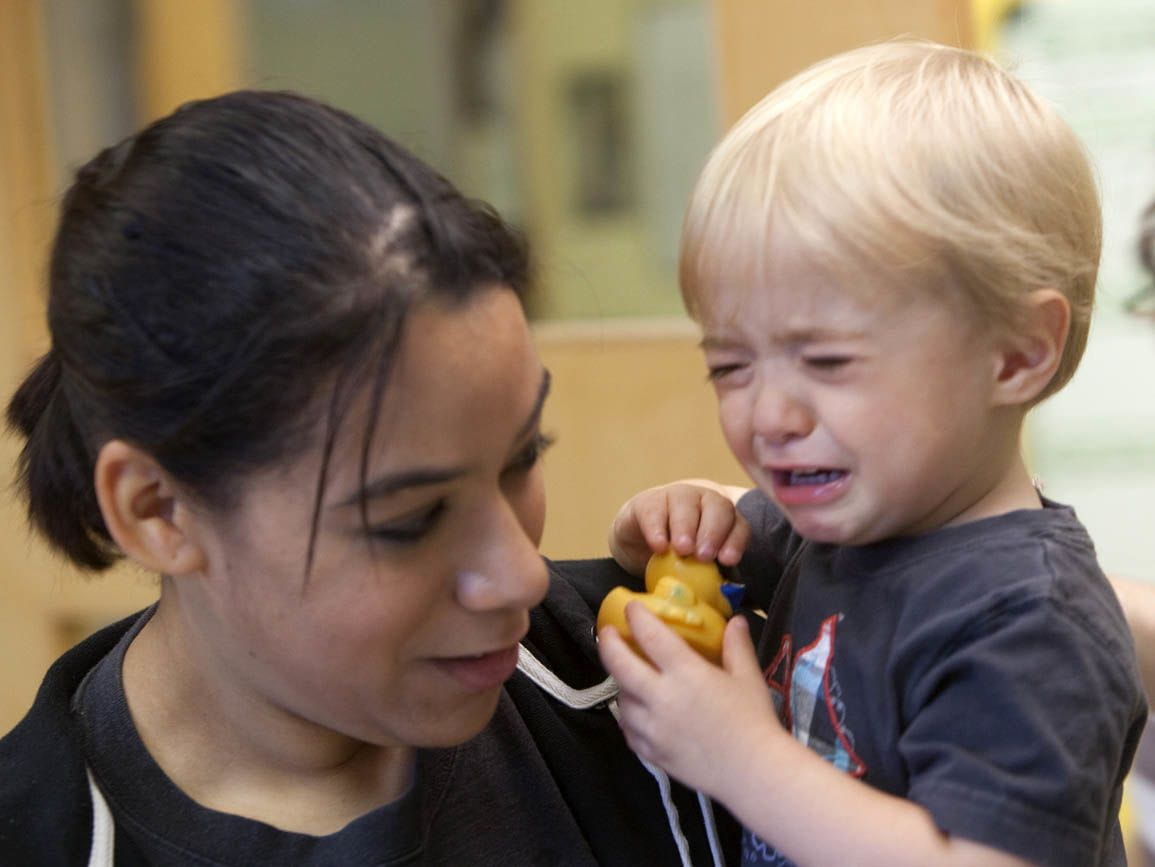
- Practice routines at home: In the days leading up to your child’s first day of preschool, try short drop-off routines and practice following simple directions. This can help your child feel more comfortable in a new setting and decrease separation anxiety.
- Visit the classroom together: Schedule a visit to the center so your child can explore the classroom and meet their teachers. Seeing the environment ahead of time can ease anxiety and help them feel a sense of security and familiarity on their first day.
Frequently asked questions
1. What age is preschool?
Preschool typically serves children between the ages of 2.9 and 5 years old, though some programs may accept children as young as 2.5 years. The exact age range can vary depending on the program’s structure and your local guidelines.
2. What if my child isn't potty-trained?
Some preschools require children to be potty trained, while others are flexible. Always ask for the program’s policy before signing your child up.
3. How long is the preschool day?
Preschool programs vary—offering half-day, full-day, or extended care options to fit different family schedules. Ask about the options they offer.
4. Can I stay with my child in the classroom?
While you may not be able to stay with your child in the classroom for a long period of time, many programs will offer gradual transitions or will allow parents to stay briefly at drop-off to help children adjust to their new environment.
Preschool is a joyful experience that sets the stage for lifelong learning. Whether your child is ready now or in a few months, understanding what preschool offers and what to look for can help you make a confident, informed decision.
Find a center near you to learn more about Bright Horizons preschool programs and how they can support your child’s learning journey.